Introduction
There are few things more frustrating than pressing your garage door opener only to hear a loud bang followed by silence, leaving you trapped inside or locked out of your home. If you are currently staring at a heavy, immovable door and wondering how to open garage door manually when spring is broken, please know that you are not alone and this is a fixable situation. While a broken torsion or extension spring removes the counterbalance system that makes lifting easy, you can still operate the door safely by following specific emergency protocols designed to protect both your body and your property.
Understanding Why Your Garage Door Feels So Heavy
Before attempting to lift the door, it is vital to understand the mechanics at play. Garage doors typically weigh between 150 and 400 pounds. The springs do not lift the door; rather, they store energy to counterbalance that weight. When a spring snaps, that stored energy vanishes instantly, transferring the full dead weight of the steel or wood panels directly onto the tracks and your arms.
According to industry safety standards, a broken spring is considered one of the most dangerous garage door malfunctions because the sudden release of tension can cause cables to snap or drums to spin violently. This is why understanding how to open garage door manually when spring is broken requires patience and caution over brute force. For a deeper technical understanding of the mechanical forces involved in these counterbalance systems, you can refer to the Garage Door Wikipedia entry, which details the physics of torsion and extension mechanisms.
Critical Safety Precautions Before Lifting
Never attempt to force a garage door open if you suspect structural damage beyond the spring. Before you touch the emergency release cord, verify the following safety checkpoints:
- Check Cable Integrity: Inspect the lift cables on both sides of the door. If a cable is frayed, snapped, or hanging loosely off the drum, do not attempt to open the door. A broken cable combined with a broken spring creates an unpredictable fall hazard.
- Clear the Area: Ensure no children, pets, or vehicles are within 10 feet of the door’s path.
- Wear Protective Gear: Use leather work gloves to prevent pinch injuries and safety glasses to shield against falling debris or rust flakes.
- Get a Spotter: Never lift a dead-weight garage door alone. Have a second person assist with stabilization and watch for track separation.
- Disconnect the Opener: Even if the power is out, unplug the unit to prevent accidental activation while you are working near the carriage.
Step-by-Step: How To Open Garage Door Manually When Spring Is Broken
Follow this precise procedure to minimize risk. Note that this process assumes you have verified cable integrity as described above.
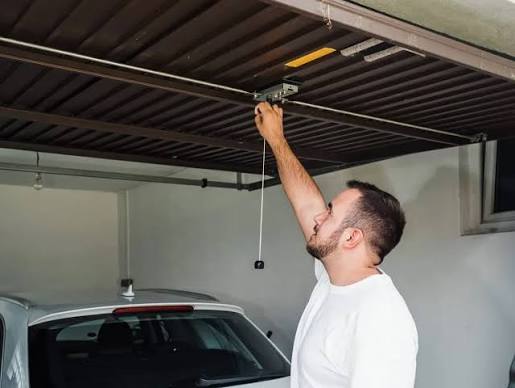
1. Locate and Pull the Emergency Release Cord
Find the red emergency release cord hanging from the trolley carriage on the opener rail. Pull it firmly down and toward the motor unit until it clicks into the “manual” position. This disengages the trolley from the chain/belt drive, allowing the door to move freely along the track independent of the motor.
2. Position Yourself Correctly
Stand inside the garage facing the door. Place your feet shoulder-width apart for stability. Bend at the knees, never at the waist, to protect your lower back. Grip the bottom edge of the door or the designated handle with both hands, keeping your fingers away from section joints to avoid crushing injuries.
3. Lift Slowly Using Leg Power
Begin lifting using your leg muscles. Because there is no spring assistance, expect the door to feel significantly heavier than normal—potentially weighing its full 200+ pounds. Lift in smooth, controlled motions. Do not jerk or yank the door, as sudden movement can derail rollers from damaged tracks.
4. Monitor Track Alignment Continuously
As you raise the door, have your spotter visually inspect the rollers and tracks on both sides. If the door begins to bind, tilt, or make grinding noises, stop immediately. Lower the door slowly and reassess. Forcing a misaligned door can permanently bend tracks or shatter rollers.
5. Secure the Door in the Open Position
Once fully open, you must mechanically secure the door. Without spring tension, gravity will pull it closed rapidly. Insert C-clamps or locking pliers onto the track just below the bottom roller on each side. Alternatively, prop a sturdy wooden brace under the bottom panel. Never trust friction alone to hold a de-sprung door.
Pros and Cons of Manual Operation With a Broken Spring
Understanding the trade-offs helps you decide whether to proceed or call a professional immediately.
| Factor | Advantages | Disadvantages |
|---|---|---|
| Accessibility | Restores vehicle access during emergencies | Requires significant physical strength |
| Cost | No immediate service fee required | High risk of personal injury or door damage |
| Time | Immediate solution vs. scheduling wait | Temporary fix; door cannot be automated until repaired |
| Safety | Avoids being trapped in/out of garage | Bypasses safety sensors and auto-reverse features |
| Equipment | Uses existing manual release mechanism | May void warranty if improper technique causes damage |
When to Stop and Call a Professional
Knowing how to open garage door manually when spring is broken is an emergency skill, not a long-term solution. Cease DIY efforts and contact a certified technician if:
- The door weighs more than you can safely control (generally over 150 lbs of perceived resistance).
- Tracks appear bent, separated, or loose from the wall.
- Rollers are cracked, chipped, or jumping out of alignment.
- You hear metallic scraping or popping sounds during lifting.
- The door does not stay level when partially raised.
Professional spring replacement typically costs between $200–$400 and includes safety inspection, proper tension calibration, and warranty coverage. Given that torsion springs cycle approximately 10,000 times before failure, replacing both springs simultaneously is recommended even if only one broke.
Frequently Asked Questions (FAQ)
Can I use my automatic opener after opening the door manually with a broken spring?
No. Running an automatic opener with a broken spring will destroy the motor, strip gears, and potentially cause the door to crash down. The opener is designed to assist balanced doors, not lift dead weight. Always repair the spring before re-engaging the automatic system.
How long can I leave my garage door open manually without fixing the spring?
You should treat this as a temporary emergency measure only. Leaving a de-sprung door secured with clamps exposes your home to security risks and weather damage. Schedule spring replacement within 24–48 hours. Prolonged manual operation also stresses hinges, rollers, and tracks unevenly, leading to costly secondary repairs.
Is it safe to replace a garage door spring myself?
For torsion springs, absolutely not. Torsion springs store extreme kinetic energy and require specialized winding bars and training. Improper handling has caused severe injuries and fatalities. Extension springs are marginally safer but still carry significant risk. Professional installation ensures correct wire size, wind count, and safety containment cables are properly installed.
Will opening the door manually damage my tracks or rollers?
It can, especially if the door is lifted unevenly or forced past binding points. Without spring balance, all weight transfers through rollers and track brackets not designed for static dead loads. Always lift evenly, monitor alignment, and stop if resistance increases unexpectedly. Post-opening inspection of hardware is strongly advised.
What tools do I need besides the emergency release cord?
At minimum, gather leather work gloves, safety glasses, two C-clamps or vise grips, and a sturdy wooden brace. Having a helper is non-negotiable for safety. Keep a flashlight handy if lighting is poor, and have your phone charged to call for help if complications arise.
Why did my spring break without warning?
Springs fail due to metal fatigue from repeated cycling, corrosion from humidity, lack of lubrication, or manufacturing defects. Most residential springs are rated for 10,000 cycles (roughly 7–10 years of daily use). Sudden temperature changes and excessive door weight from added insulation or windows can accelerate failure. Regular maintenance extends lifespan but cannot prevent eventual wear.
Conclusion
Mastering how to open garage door manually when spring is broken empowers you to handle emergencies confidently while prioritizing safety over speed. Remember that manual operation is strictly a temporary bridge to professional repair—not a permanent workaround. By following the step-by-step protocol outlined above, respecting weight limitations, and securing the door properly, you protect yourself from injury and your property from cascading damage.
If this guide helped you navigate a stressful situation, please share it on social media to help other homeowners prepare for this common emergency. Tag a friend who might benefit from knowing these critical safety steps before they face a broken spring themselves. Your share could prevent someone from making a dangerous mistake during their next garage door crisis. Stay safe, lift smart, and always prioritize professional repair over prolonged manual operation.
Leave a Reply