Is there anything more frustrating than pressing your garage door opener, hearing a loud clang, and watching your door hang crookedly in the frame? You are not alone. Thousands of homeowners face this exact scenario every year, often caused by minor impacts or worn-out hardware. If you are wondering how to get your garage door back on track, you have come to the right place. This guide will walk you through the safe, effective steps to realign your door without calling an expensive technician—provided the damage isn’t severe.
Why Did My Garage Door Come Off the Track?
Before jumping into the fix, it is crucial to understand why this happened. Garage doors are heavy, tension-based systems. When they derail, it is rarely random. Understanding the root cause helps prevent recurrence.
Common Causes of Derailment
- Impact Damage: Hitting the door with a vehicle or a large object can bend the tracks or dislodge rollers.
- Loose Hardware: Over time, vibration loosens the bolts holding the track brackets to the wall.
- Worn Rollers: Plastic or steel rollers can crack or wear down, causing them to slip out of the groove.
- Broken Cables: If a lifting cable snaps, the uneven tension can pull one side of the door off its track.
According to industry data, nearly 30% of garage door service calls are related to track alignment or roller issues. Addressing these early can save you hundreds of dollars in replacement costs.
Safety First: Critical Precautions Before You Start
Warning: Garage doors weigh between 150 to 400 pounds. The springs under high tension can cause severe injury if mishandled.
Before attempting any repair:
- Disconnect the Opener: Pull the red emergency release cord to disconnect the door from the automatic opener.
- Close the Door Manually: If possible, lower the door completely. If it is stuck halfway, do not force it.
- Secure the Door: Use locking pliers or C-clamps on the track below the bottom roller to prevent the door from sliding down unexpectedly.
- Do Not Touch the Springs: If the issue involves broken torsion or extension springs, stop immediately. Spring repair requires professional tools and training.
For more detailed safety standards regarding garage door systems, you can refer to general mechanical safety guidelines on Wikipedia.
Tools You Will Need
Gather these tools before starting to ensure a smooth process:
- Adjustable wrench or socket set
- Rubber mallet (never use a steel hammer on metal tracks)
- Level (at least 2 feet long)
- Pliers
- Lubricant (silicone-based or lithium grease)
- Safety glasses and work gloves
- A helper (highly recommended for holding the door)
Step-by-Step: How To Get Your Garage Door Back On Track
Follow these steps carefully. If at any point you feel unsure, pause and consider calling a professional.
Step 1: Inspect the Damage
Look closely at the area where the door came off.
- Are the rollers intact?
- Is the track bent or dented?
- Are the mounting brackets loose?
If the track is severely bent, you may need to replace that section rather than just realigning it. Minor bends can sometimes be hammered out gently with a rubber mallet.
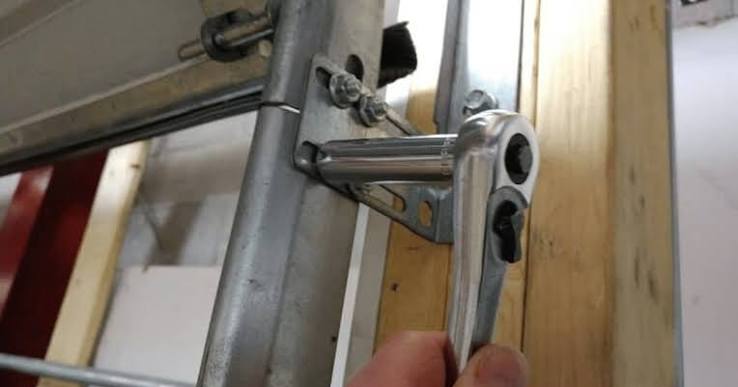
Step 2: Loosen the Track Bolts
Using your wrench, slightly loosen the bolts that hold the vertical track to the wall brackets. Do not remove them completely; just loosen them enough so the track can move slightly. This gives you the flexibility to realign the track with the rollers.
Step 3: Realign the Rollers
This is the core part of learning how to get your garage door back on track.
- With the help of your assistant, lift the door slightly to relieve pressure on the rollers.
- Gently guide the derailed rollers back into the track groove.
- You may need to wiggle the track slightly to line up the opening with the roller.
Pro Tip: If the rollers are damaged or cracked, now is the time to replace them. Worn rollers will only cause the door to derail again.
Step 4: Tighten the Track Brackets
Once the rollers are securely inside the track:
- Use your level to ensure the vertical track is perfectly plumb (vertical).
- Check that the horizontal track has a slight downward slope toward the back of the garage (usually 1/4 inch per foot) to help the door close smoothly.
- Tighten all the bracket bolts securely. Start from the top and work your way down.
Step 5: Test the Door Movement
Remove the clamps or locking pliers. Manually lift and lower the door several times. It should move smoothly without binding, scraping, or jumping. If it feels rough, check for obstructions or misaligned sections.
Step 6: Lubricate and Reconnect the Opener
Apply a silicone-based lubricant to the rollers, hinges, and track. Avoid WD-40 as it attracts dust and grime over time. Once the door moves freely, reconnect the opener by pulling the release handle toward the motor unit until it clicks back into place.
Troubleshooting Common Issues
Even after realignment, you might encounter some hiccups. Here is a quick comparison of common post-repair issues:
| Issue | Possible Cause | Solution |
|---|---|---|
| Door sticks halfway | Dirty track or dry rollers | Clean track with a damp cloth and lubricate. |
| Loud grinding noise | Damaged rollers or gear | Replace rollers or inspect opener gears. |
| Door reverses before closing | Misaligned safety sensors | Clean sensor lenses and adjust alignment. |
| Uneven movement | Loose cables or springs | Call a professional for cable/spring adjustment. |
When to Call a Professional
While knowing how to get your garage door back on track is empowering, some situations demand expert intervention:
- Broken Springs: Torsion springs store dangerous amounts of energy. Never attempt to repair them yourself.
- Bent Tracks Beyond Repair: If the metal is kinked or cracked, it needs replacement.
- Damaged Panels: If the door itself is warped, it may not fit the track correctly even after realignment.
- Persistent Issues: If the door derails repeatedly despite your fixes, there may be a deeper structural issue.
FAQ Section
1. Can I fix a garage door off track by myself?
Yes, if the issue is simply misaligned rollers and loose brackets. However, if springs or cables are involved, it is safer to hire a professional due to the high risk of injury.
2. How much does it cost to fix a garage door off track?
If you do it yourself, the cost is minimal (lubricant and possibly new rollers, around $20–$50). A professional service call typically ranges from $150 to $300, depending on parts and labor.
3. Why does my garage door keep coming off the track?
Repeated derailment usually indicates worn rollers, loose hardware, or a bent track. It could also mean the door is unbalanced. Regular maintenance and tightening of bolts can prevent this.
4. What type of lubricant is best for garage doors?
Use a silicone-based spray or lithium grease. These products do not attract dirt like oil-based lubricants (e.g., WD-40) and provide long-lasting protection against friction.
5. How often should I maintain my garage door?
Experts recommend inspecting and lubricating your garage door system every six months. Check for loose bolts, worn rollers, and smooth operation during each inspection.
6. Is it dangerous to operate a garage door that is slightly off track?
Yes. Operating a misaligned door can cause further damage to the rollers, track, and opener motor. It can also lead to the door falling unexpectedly, posing a serious safety hazard.
Conclusion
Learning how to get your garage door back on track is a valuable skill that can save you time and money. By following the steps above—inspecting the damage, loosening brackets, realigning rollers, and securing the system—you can restore functionality to your garage door safely. Remember, regular maintenance is key to preventing future derailments. Keep your tracks clean, your rollers lubricated, and your bolts tight.
If you found this guide helpful, please share it with your friends and neighbors on social media. You never know who else might be struggling with a stubborn garage door! Stay safe, and happy fixing.
Leave a Reply