Have you ever walked out to your car in the morning, pressed the remote, and heard a loud bang followed by silence? It is one of the most frustrating moments for any homeowner. A broken garage door spring halts your daily routine instantly, leaving you stuck and unsure of what to do next. If you are currently facing this issue, you are likely asking yourself: how much does a new garage door spring cost? Understanding the pricing breakdown can help you avoid overpaying and ensure your door is safe and functional again.
Understanding the Price Range: What to Expect
The cost of replacing a garage door spring varies significantly depending on the type of spring, the weight of your door, and whether you hire a professional or attempt a DIY fix. Generally, homeowners can expect to pay between $150 and $350 for a complete professional replacement, including parts and labor.
However, if you look strictly at the part itself, the price is much lower. A single high-quality spring typically costs between $40 and $100. The bulk of the expense comes from the specialized labor required, as garage door springs are under extreme tension and can be dangerous to handle without proper training and tools.
| Item | Average Cost Range |
|---|---|
| Torsion Spring (Part Only) | $40 – $100 |
| Extension Spring (Part Only) | $20 – $60 |
| Professional Labor | $100 – $200 |
| Total Professional Replacement | $150 – $350 |
| Emergency/After-Hours Service | +$50 – $100 surcharge |
Note: Prices may vary based on your location and the specific vendor.
Torsion Springs vs. Extension Springs: Which Is More Expensive?
Not all garage doors use the same mechanism. Identifying which type your door uses is the first step in estimating the cost. There are two main types: torsion springs and extension springs.
Torsion Springs
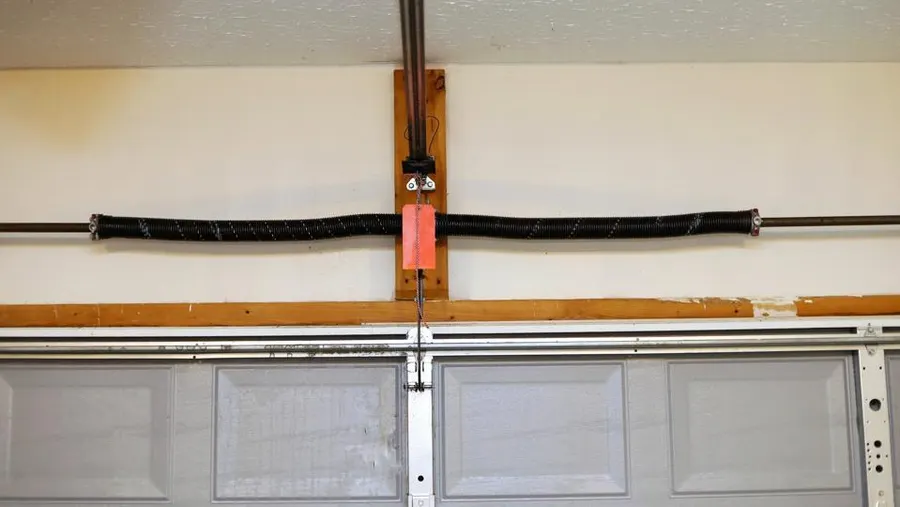
These are mounted horizontally above the closed garage door. They are more common in modern homes because they offer smoother operation and last longer.
- Cost: Higher upfront cost ($40–$100 per spring).
- Lifespan: 15,000 to 20,000 cycles.
- Safety: Safer when installed correctly but extremely dangerous to replace due to high torque.
Extension Springs
These run parallel to the horizontal tracks on both sides of the door. They stretch and contract to lift the door.
- Cost: Lower upfront cost ($20–$60 per spring).
- Lifespan: 10,000 to 15,000 cycles.
- Safety: Prone to snapping violently if not equipped with safety cables.
While extension springs are cheaper to buy, many professionals recommend upgrading to torsion springs if your system allows it, due to their durability and balance. For more technical details on how these mechanisms work, you can refer to the general principles of mechanical springs on Wikipedia.
Why Is Labor So High for Garage Door Spring Replacement?
Many homeowners are shocked to see the labor charge on their invoice. It is important to understand that this is not just “handyman” work; it is a specialized trade.
Garage door springs are under immense tension—enough to lift hundreds of pounds. A standard torsion spring can store enough energy to cause severe injury or even death if it slips during installation. Professionals use specific winding bars, clamps, and safety gear to manage this risk.
When you pay for labor, you are paying for:
- Risk Management: The technician assumes the liability of handling high-tension components.
- Specialized Tools: Winding bars, vice grips, and ladder stabilizers are required.
- Calibration: The spring must be wound to the exact number of turns specified for your door’s weight. An incorrect calculation can lead to premature failure or damage to the garage door opener.
Factors That Influence the Final Cost
Several variables can push your final bill higher or lower. Being aware of these can help you budget accurately.
1. Number of Springs
Most residential garage doors have either one or two springs.
- Single Spring System: Common on lighter, single-car doors. Cheaper to replace.
- Dual Spring System: Common on heavier, double-car doors. If one breaks, it is often recommended to replace both, even if the other looks fine. This doubles the parts cost but ensures balanced lifting and prevents the second spring from breaking shortly after.
2. Cycle Life Rating
Springs are rated by “cycles” (one open and one close).
- Standard Duty (10,000 cycles): Cheaper, lasts ~7–9 years with average use.
- High Cycle (25,000+ cycles): More expensive, can last 15+ years. If you plan to stay in your home long-term, investing in high-cycle springs is cost-effective.
3. Geographic Location
Labor rates vary by region. Homeowners in major metropolitan areas like New York or San Francisco will pay significantly more for service calls than those in rural areas.
4. Emergency Service
If your door breaks on a weekend, holiday, or late at night, expect an emergency surcharge. This can add $50 to $100 to the total bill. Scheduling during regular business hours is the easiest way to save money.
DIY vs. Professional Installation: Is It Worth the Risk?
With the rise of online tutorials, many homeowners consider replacing the spring themselves to save on labor costs. While the parts might only cost $50, the risks are substantial.
The Case for DIY
- Pros: Saves $100–$200 in labor.
- Cons: Requires purchasing specialized winding bars ($20–$30). High risk of personal injury. Voiding manufacturer warranties. Potential for improper calibration, leading to opener burnout.
The Case for Professional Help
- Pros: Guaranteed safety. Proper calibration. Warranty on both parts and labor. Quick completion (usually under an hour).
- Cons: Higher upfront cost.
Expert Verdict: Unless you have prior experience with mechanical systems and own the correct safety tools, hire a professional. The potential medical costs from an accident far outweigh the savings on labor.
How to Extend the Life of Your Garage Door Springs
Once you have paid for a new spring, you want it to last as long as possible. Here are three simple maintenance tips:
- Lubricate Regularly: Use a silicone-based lubricant or white lithium grease on the springs every six months. Avoid WD-40, as it attracts dust and can dry out the metal.
- Balance Check: Disconnect the opener (pull the red release cord) and manually lift the door halfway. If it stays in place, it is balanced. If it falls or rises, the spring tension is off, and you should call a technician.
- Visual Inspections: Look for gaps in the torsion spring coils. A visible gap indicates the spring is stretched out and nearing the end of its life.
Frequently Asked Questions (FAQ)
1. How long do garage door springs usually last?
On average, a standard garage door spring lasts between 7 to 9 years based on typical usage (opening and closing the door 2–4 times a day). High-cycle springs can last up to 15 years.
2. Can I replace just one spring if I have a dual-spring system?
It is highly recommended to replace both springs at the same time. Since they were installed at the same time, the second spring is likely near the end of its life cycle as well. Replacing only one puts uneven stress on the door and the new spring.
3. Is it dangerous to operate a garage door with a broken spring?
Yes. Do not attempt to open the door manually or with the opener. The door is extremely heavy without the counterbalance of the spring. Trying to force it can damage the tracks, rollers, and opener, and poses a serious crushing hazard.
4. Does homeowners insurance cover broken garage door springs?
Typically, no. Broken springs are considered wear-and-tear items, similar to brake pads on a car. Insurance usually covers sudden, accidental damage (like a car hitting the door), but not mechanical failure due to age.
5. How can I tell if my spring is broken?
Look for a visible gap in the torsion spring coils above the door. For extension springs, look for a broken coil or a snapped cable. You may also hear a loud bang when the break occurs, and the door will feel incredibly heavy if you try to lift it manually.
Conclusion
So, how much does a new garage door spring cost? For most homeowners, the answer is between $150 and $350 for a professional job that ensures safety and longevity. While the temptation to save money with a DIY approach is strong, the dangers associated with high-tension springs make professional installation the wisest choice.
By understanding the difference between torsion and extension springs, and knowing the factors that influence price, you can make an informed decision and avoid being overcharged. Remember, a well-maintained garage door not only secures your home but also adds convenience to your daily life.
If you found this guide helpful, please share it with your neighbors or on social media. You never know who else might be stuck with a broken garage door spring today!
Leave a Reply