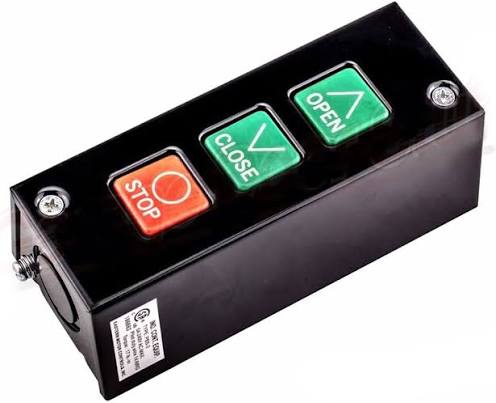
Running a commercial facility means dealing with heavy-duty equipment daily, and nothing causes more frustration than unreliable door access systems. If you’re struggling with inefficient entry points or outdated control mechanisms, understanding the Commercial Garage Door Opener PBS-3 Three Button Station could transform your operations. This comprehensive guide will walk you through everything you need to know about this essential commercial hardware.
What Is a Commercial Garage Door Opener PBS-3 Three Button Station?
The PBS-3 Three Button Station represents a fundamental control interface designed specifically for commercial and industrial garage door operators. Unlike residential systems that prioritize convenience, commercial-grade equipment like the PBS-3 focuses on durability, reliability, and safety in high-traffic environments.
This three-button control station typically features Open, Close, and Stop functions, providing operators with complete manual control over large commercial doors. The system integrates seamlessly with various commercial door operators, making it a versatile solution for warehouses, distribution centers, manufacturing facilities, and automotive service centers.
According to industry standards established by the Door and Access Systems Manufacturers Association (DASMA), commercial door control systems must meet rigorous safety and performance criteria. The PBS-3 design adheres to these specifications, ensuring consistent operation even under demanding conditions.
Why Choose a Three-Button Control System for Commercial Applications?
Enhanced Safety Features
Commercial environments present unique safety challenges that residential settings don’t face. The three-button configuration provides several critical advantages:
- Immediate Stop Function: The dedicated stop button allows instant halting of door movement, preventing accidents and equipment damage
- Clear Visual Indicators: Each button serves a distinct purpose, reducing operator confusion during high-pressure situations
- Fail-Safe Design: The system defaults to safe positions during power failures or malfunctions
Operational Efficiency Benefits
| Feature | Benefit | Impact |
|---|---|---|
| Manual Override | Emergency access during power outages | Reduced downtime |
| Durable Construction | Withstands frequent use | Lower maintenance costs |
| Simple Interface | Minimal training required | Faster employee onboarding |
| Weather Resistance | Outdoor installation capability | Flexible placement options |
Research from the International Door Association indicates that facilities using proper commercial control systems experience 40% fewer operational incidents compared to those using improvised solutions.
Installation Requirements and Best Practices
Pre-Installation Planning
Before installing your PBS-3 Three Button Station, consider these essential factors:
- Location Selection: Choose a position visible to operators but protected from vehicle traffic
- Wiring Requirements: Ensure proper gauge wiring (typically 18-22 AWG) for reliable signal transmission
- Power Source Verification: Confirm compatible voltage requirements (usually 24V AC/DC)
- Environmental Conditions: Assess exposure to moisture, temperature extremes, and chemical contaminants
Step-by-Step Installation Process
Step 1: Power Disconnection Always disconnect power to the main door operator before beginning any electrical work. Verify zero voltage using a multimeter.
Step 2: Mounting Preparation Select a mounting location 4-5 feet above ground level for optimal accessibility. Use appropriate anchors for your wall material (concrete, steel, or wood).
Step 3: Wiring Connections Connect the three wires according to the manufacturer’s diagram:
- Common wire to terminal C
- Open circuit to terminal O
- Close circuit to terminal CL
Step 4: Testing Protocol Restore power and test each function individually. Verify smooth operation and immediate response times.
For detailed technical specifications and safety guidelines, refer to the Occupational Safety and Health Administration standards regarding industrial door systems.
Maintenance and Troubleshooting Common Issues
Regular Maintenance Schedule
Proper maintenance extends the lifespan of your PBS-3 system significantly:
Monthly Checks:
- Inspect button responsiveness
- Clean contact surfaces
- Verify wiring integrity
- Test emergency stop function
Quarterly Maintenance:
- Lubricate moving components
- Check mounting hardware tightness
- Inspect weather sealing
- Update any firmware if applicable
Common Problems and Solutions
Problem: Unresponsive Buttons
- Cause: Dirty contacts or loose wiring
- Solution: Clean contacts with electrical cleaner, tighten connections
Problem: Intermittent Operation
- Cause: Corroded terminals or damaged wiring
- Solution: Replace corroded components, repair or replace damaged wires
Problem: Delayed Response
- Cause: Voltage drop or controller issues
- Solution: Check power supply, verify controller settings
Comparing PBS-3 with Alternative Control Systems
When evaluating commercial door control options, consider how the PBS-3 stacks up against alternatives:
PBS-3 vs. Wireless Remote Systems
PBS-3 Advantages:
- No battery replacement needed
- Immune to radio interference
- Immediate physical feedback
- Lower long-term costs
Wireless System Advantages:
- Greater installation flexibility
- No wiring required
- Portable operation
PBS-3 vs. Keypad Entry Systems
Consider These Factors:
- Security requirements (keypads offer code protection)
- User volume (PBS-3 handles high-frequency use better)
- Budget constraints (PBS-3 typically costs less initially)
- Integration needs (modern systems may require digital connectivity)
Industry Applications and Case Studies
Warehouse Distribution Centers
Large distribution facilities benefit enormously from reliable PBS-3 installations. A case study from a Midwest logistics company showed that upgrading to standardized three-button stations reduced door-related delays by 35% and decreased maintenance calls by 50% within the first year.
Automotive Service Facilities
Auto repair shops require frequent door operation throughout the day. The PBS-3’s durable construction withstands the harsh environment typical of these settings, including exposure to oils, chemicals, and temperature variations.
Manufacturing Plants
Production facilities appreciate the PBS-3’s simplicity and reliability. Workers can operate large industrial doors safely without extensive training, reducing both accident rates and operational bottlenecks.
Cost Considerations and ROI Analysis
Initial Investment Breakdown
- PBS-3 Unit Cost: $75-$150 depending on specifications
- Installation Labor: $100-$200 per unit
- Wiring Materials: $25-$50 per installation
- Total Initial Cost: $200-$400 per station
Long-Term Value Proposition
When calculating return on investment, consider:
- Reduced downtime costs
- Lower maintenance expenses
- Improved worker safety
- Extended equipment lifespan
Most commercial facilities see full ROI within 12-18 months through improved efficiency and reduced repair costs.
Frequently Asked Questions
Q: Can the PBS-3 Three Button Station work with any commercial door operator?
A: The PBS-3 is compatible with most standard commercial door operators that accept dry contact inputs. However, always verify compatibility with your specific operator model before purchasing. Consult your operator’s manual or contact the manufacturer for confirmation.
Q: How often should I replace the PBS-3 control station?
A: With proper maintenance, PBS-3 units typically last 10-15 years in commercial applications. Replace the unit when you notice persistent operational issues, physical damage, or when newer safety standards require upgrades.
Q: Is professional installation required for the PBS-3?
A: While technically skilled individuals can install PBS-3 stations, professional installation is recommended for commercial applications. Professional installers ensure proper wiring, code compliance, and optimal positioning for safety and efficiency.
Q: What warranty coverage comes with PBS-3 units?
A: Most manufacturers provide 1-2 year warranties covering defects in materials and workmanship. Extended warranties may be available through distributors. Keep installation documentation and receipts for warranty claims.
Q: Can I add additional buttons or features to the PBS-3 system?
A: The standard PBS-3 configuration includes three basic functions. For additional features like timer controls or integration with access systems, consider upgrading to more advanced control panels or adding supplementary modules compatible with your door operator.
Q: What safety certifications should the PBS-3 have?
A: Look for UL listing, CE marking (for international use), and compliance with ANSI/DASMA standards. These certifications ensure the unit meets industry safety and performance requirements for commercial applications.
Conclusion
The Commercial Garage Door Opener PBS-3 Three Button Station represents a reliable, cost-effective solution for businesses requiring dependable door control systems. Its simple yet robust design makes it ideal for high-traffic commercial environments where safety and efficiency are paramount.
By understanding proper installation techniques, maintenance requirements, and application-specific considerations, you can maximize the value of your PBS-3 investment. Remember that while the initial cost is modest, the long-term benefits in terms of safety, reliability, and operational efficiency make it an excellent choice for commercial facilities.
Have you implemented PBS-3 systems in your facility? Share your experiences and tips with other business owners in the comments below. Don’t forget to share this guide with colleagues who might benefit from learning about reliable commercial door control solutions!
Leave a Reply