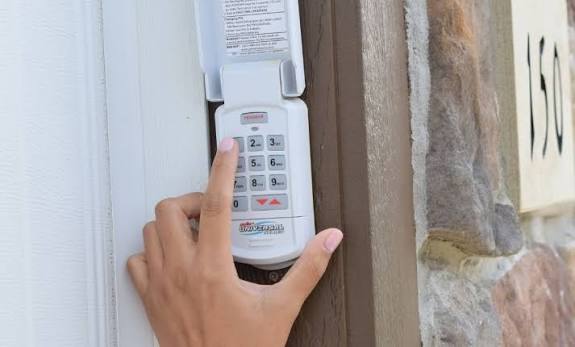
Have you ever stood in your driveway, pressing a new remote button repeatedly, only to watch your garage door remain stubbornly closed? It is a frustrating scenario that many homeowners face when trying to replace a lost or broken remote. You might be asking yourself: Can a universal garage door opener open any garage door? The short answer is no, but understanding why can save you time, money, and significant headache.
While the term “universal” suggests it works with everything, the reality of garage door technology is more nuanced. In this guide, we will break down exactly how these remotes work, which doors they can control, and how to ensure you buy the right device for your specific setup.
How Do Universal Garage Door Remotes Actually Work?
To understand compatibility, we first need to look under the hood of how these devices communicate. A universal remote is designed to mimic the signal of your original manufacturer-specific remote. However, it does not do this by magic; it does so by matching specific radio frequencies and coding protocols.
Most residential garage door openers operate on one of three primary frequencies:
- 315 MHz: Common in older units and some LiftMaster/Chamberlain models.
- 390 MHz: Often found in mid-range models from various brands.
- 433 MHz: Frequently used in European models and newer smart openers.
If your universal remote operates on 315 MHz but your garage door opener receiver is tuned to 390 MHz, they simply cannot “hear” each other. This is the first major hurdle in compatibility. Beyond frequency, the remote must also match the coding type, which brings us to the next critical factor: security evolution.
The Evolution of Security: Fixed Code vs. Rolling Code
Not all garage doors speak the same language. Over the past three decades, manufacturers have drastically changed how signals are encrypted to prevent theft and unauthorized access. This evolution is the primary reason why a single universal remote cannot open any door.
1. Fixed Code (Dip Switches)
Used primarily before the late 1990s, these systems use a series of tiny switches (dip switches) inside both the remote and the motor unit. To program a universal remote, you simply match the switch positions. These are easy to clone but highly insecure.
2. Learning Code (Smart Code)
Introduced in the late 90s, these systems do not use physical switches. Instead, you press a “learn” button on the motor unit to pair the remote. They offer better security than fixed codes but are still vulnerable to code grabbing.
3. Rolling Code (Security+)
This is the modern standard, used by most major brands like LiftMaster, Chamberlain, Craftsman, and Genie since the early 2000s. Every time you press the button, the remote sends a new, unique code. The receiver expects the next code in a complex algorithmic sequence.
Expert Insight: According to cybersecurity studies, rolling code technology has reduced garage-related burglaries significantly because simple “code grabbers” cannot replicate the next valid signal. For more on the history of radio frequency security standards, you can refer to general encryption principles documented on Wikipedia.
If you have a modern rolling code system, your universal remote must explicitly state that it supports “Security+” or “Rolling Code” technology. A basic universal remote designed for older dip-switch models will never work on a modern secure door.
Which Brands Are Compatible with Universal Remotes?
While no remote is truly “one-size-fits-all,” many universal remotes are designed to cover the majority of the US market. The big players dominate the industry, and most high-quality universal remotes are programmed to work with them.
| Brand | Compatibility Level | Notes |
|---|---|---|
| LiftMaster / Chamberlain | High | Most universals support their Security+ 1.0 and 2.0 protocols. |
| Genie | High | Compatible with Intellicode and older models. |
| Craftsman | Medium-High | Older Craftsman doors are often rebranded LiftMasters. Newer ones may require specific pairing. |
| Stanley | Medium | Works with many universal remotes, but check frequency carefully. |
| Wayne Dalton | Low-Medium | Often uses proprietary frequencies that generic remotes struggle with. |
| Linear / Moore-O-Matic | Low | These commercial-grade or older residential units often require brand-specific remotes. |
Key Takeaway: If your garage door opener was installed after 2010, there is a very high chance it is compatible with a modern universal remote, provided you buy one that supports rolling codes. If your system is from the 1980s or early 90s, you may need a specific “vintage” compatible remote rather than a modern universal one.
Step-by-Step: How to Program a Universal Remote
Buying the right remote is only half the battle. Programming it correctly is essential. While steps vary by model, here is a general guide for programming a modern rolling-code universal remote.
What You Need:
- Your new universal remote.
- A sturdy ladder.
- Access to the garage door motor unit (the box hanging from your ceiling).
The Process:
- Locate the Learn Button: Climb your ladder and find the motor unit. Look for a small button, usually colored yellow, purple, orange, or red. It may be labeled “Learn,” “Program,” or “Smart.”
- Clear Old Codes (Optional but Recommended): Press and hold the learn button for about 6–10 seconds until the indicator light blinks or goes out. This clears all previously paired remotes. Note: You will need to reprogram all your existing remotes after this step.
- Initiate Pairing Mode: Press the learn button once briefly. The indicator light should turn on or start blinking. You typically have 30 seconds to complete the next step.
- Send the Signal: Within those 30 seconds, go to your universal remote. Press and hold the button you wish to program for 2–3 seconds, then release. Repeat this press-and-release action two more times.
- Confirm Success: Watch the motor unit. If the light blinks or clicks, the pairing was successful. Test the remote by standing outside the garage and pressing the button.
Pro Tip: If the remote does not program on the first try, check the battery. Even new batteries can be defective. Also, ensure you are within 5 feet of the motor unit during programming to ensure a strong signal reception.
Common Reasons Why Universal Remotes Fail
If you have followed the steps above and your door still does not open, consider these common pitfalls:
- Frequency Mismatch: As mentioned, if the remote is 315 MHz and the opener is 390 MHz, it will not work. Check the label on your motor unit for the frequency.
- Proprietary Technology: Some newer smart openers (like MyQ-enabled units) use Wi-Fi or Bluetooth for primary control. While they often still accept RF remotes, they may require specific certified accessories rather than generic universals.
- Interference: LED light bulbs in the garage can sometimes emit electromagnetic interference that disrupts the 315–433 MHz range. Try turning off the garage lights and testing the remote again.
- Damaged Receiver Antenna: The motor unit has a small wire hanging down that acts as an antenna. If this is broken or tucked inside the metal casing, the signal range will be severely limited.
FAQ: Your Questions Answered
1. Can a universal remote open my neighbor’s garage door?
No, not if their system is secure. Modern rolling code technology ensures that each remote is paired uniquely to a specific motor unit. Even if you have the same brand and model, the codes are randomized and encrypted. It is statistically nearly impossible for a universal remote to accidentally open a neighbor’s modern garage door.
2. Are universal remotes less secure than original manufacturer remotes?
Generally, no. High-quality universal remotes use the same encryption standards (like Security+ 2.0) as the original equipment. However, cheap, unbranded generics may lack robust encryption. Always buy from reputable brands like Chamberlain, Genie, or well-reviewed third-party manufacturers like Masterbuilt or Intermatic.
3. Can I use a universal remote for a garage door without a motor?
No. Universal remotes are designed to send radio signals to an electronic receiver on a motorized opener. If you have a manual garage door with no motor, a remote will have nothing to communicate with. You would need to install a garage door opener kit first.
4. How many universal remotes can I program to one garage door?
Most modern garage door openers can store between 10 to 50 different remote codes in their memory. This allows you to have multiple universal remotes, keypads, and car visor clips all working with the same door. Check your specific model’s manual for the exact limit.
5. What should I do if my universal remote stops working suddenly?
First, replace the battery. If that fails, try reprogramming the remote using the steps outlined above. If it still fails, check if the “Lock” feature on your wall console has been activated, which disables all remote controls. Finally, inspect the motor unit’s antenna for damage.
Conclusion
So, can a universal garage door opener open any garage door? The answer is a qualified no. It cannot open every door due to differences in frequency, age, and security protocols. However, a high-quality universal remote can open the vast majority of residential garage doors installed in the last 20 years, provided it matches the frequency and supports rolling code technology.
By understanding your specific opener’s requirements—checking the frequency and brand—you can confidently choose a universal remote that saves you money without sacrificing convenience or security. Don’t let a lost remote lock you out; with the right knowledge, you can get back in control of your garage in minutes.
Found this guide helpful? Share it with your neighbors or on social media to help others solve their garage door woes!
Leave a Reply