Choosing between a 1/2 Vs 3/4 Hp Garage Door Opener can feel overwhelming—especially if you’re unsure how much power your garage door really needs. Pick the wrong one, and you could face slow performance or unnecessary costs. In this guide, we’ll break everything down so you can confidently choose the best option for your home.
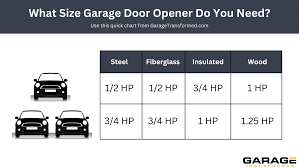
What Does HP Mean in Garage Door Openers?
Before comparing 1/2 Vs 3/4 Hp Garage Door Opener, it’s important to understand horsepower (HP).
Read too: How Do You Change Code On Garage Door Keypad Fast?
Horsepower measures the motor’s lifting strength. In simple terms:
- Higher HP = more lifting power
- Lower HP = sufficient for lighter doors
👉 According to general definitions in physics, horsepower represents the rate at which work is done, as explained in this Wikipedia article on horsepower.
1/2 Vs 3/4 Hp Garage Door Opener: Key Differences
Here’s a quick comparison to help you understand the core differences:
| Feature | 1/2 HP Opener | 3/4 HP Opener |
|---|---|---|
| Power | Moderate | High |
| Ideal Door Type | Single, lightweight | Double, heavy |
| Speed | Standard | Faster |
| Noise Level | Moderate | Slightly smoother |
| Cost | Lower 💲💲 | Higher 💲💲💲 |
| Durability | Good | Excellent |
Which Is Better: 1/2 HP or 3/4 HP Garage Door Opener?
The answer depends on your specific needs.
Choose 1/2 HP if:
- You have a single garage door
- The door is made of aluminum or steel
- You want a budget-friendly option
Choose 3/4 HP if:
- You have a double garage door
- Your door is heavy (wood or insulated steel)
- You want long-term durability and smoother operation
How Much Power Do You Really Need?
This is one of the most common questions homeowners ask.
General Guidelines:
- Up to 150 lbs door → 1/2 HP is enough
- 150–300 lbs door → 3/4 HP recommended
- Over 300 lbs door → Consider 1 HP or higher
Real Insight:
A typical double garage door can weigh between 200–350 lbs, especially if insulated. That’s why many professionals recommend 3/4 HP for modern homes.
Does Higher HP Mean Faster Opening?
Not always—but often, yes.
A 3/4 HP opener:
- Handles load more efficiently
- Maintains consistent speed under pressure
- Reduces strain on components
However, speed also depends on:
- Drive type (belt vs chain)
- Motor quality
- Installation accuracy
Energy Efficiency: Is 3/4 HP Worth It?
Surprisingly, a 3/4 HP motor isn’t always less efficient.
Because it:
- Works with less strain
- Completes cycles faster
It can sometimes consume similar or even less energy over time compared to an overworked 1/2 HP unit.
Noise Comparison: Which One Is Quieter?
Horsepower alone doesn’t determine noise—but it plays a role.
- 1/2 HP motors may struggle slightly → more vibration
- 3/4 HP motors run smoother → less strain noise
That said, drive type matters more:
- Belt drive = quiet
- Chain drive = louder
Pros and Cons Breakdown
1/2 HP Advantages:
- ✅ Lower cost
- ✅ Sufficient for standard doors
- ✅ Widely available
1/2 HP Disadvantages:
- ❌ Not ideal for heavy doors
- ❌ Can wear out faster under heavy use
3/4 HP Advantages:
- ✅ Stronger lifting power
- ✅ Better for heavy or insulated doors
- ✅ Longer lifespan under load
3/4 HP Disadvantages:
- ❌ Higher upfront cost
- ❌ Overkill for small doors
Step-by-Step: How to Choose the Right HP
Follow this simple process:
Step 1: Measure Your Door Size
- Single door (8–10 ft wide) → likely 1/2 HP
- Double door (16 ft wide) → consider 3/4 HP
Step 2: Check Door Material
- Aluminum / non-insulated → lighter
- Wood / insulated steel → heavier
Step 3: Estimate Door Weight
- Use manufacturer specs or estimate:
- Light: under 150 lbs
- Medium: 150–300 lbs
- Heavy: 300+ lbs
Step 4: Consider Usage Frequency
- 1–3 times daily → 1/2 HP is fine
- 5–10+ cycles daily → 3/4 HP is better
Step 5: Think Long-Term
If you plan to upgrade your door later, choosing 3/4 HP now can save future replacement costs.
Real-World Scenario
Let’s say you own a suburban home in the US with:
- A 16-foot insulated steel garage door
- Daily usage of 6–8 times
👉 A 1/2 HP opener might work—but it will wear out faster.
👉 A 3/4 HP opener will provide smoother, longer-lasting performance.
Common Mistakes to Avoid
- Choosing based on price alone
- Ignoring door weight
- Overestimating needs (buying too powerful)
- Not considering future upgrades
Frequently Asked Questions
FAQ: 1/2 Vs 3/4 Hp Garage Door Opener
1. Is 1/2 HP enough for a double garage door?
It can work for lighter double doors, but generally, a 3/4 HP opener is recommended for better performance and durability.
2. Is 3/4 HP too much for a single garage door?
Yes, in most cases it’s more than necessary. However, it can still be a good investment for longevity.
3. Does higher HP increase electricity bills?
Not significantly. A stronger motor often works more efficiently, which can offset energy use.
4. Which lasts longer: 1/2 HP or 3/4 HP?
A 3/4 HP opener typically lasts longer because it operates under less strain.
5. Can I upgrade from 1/2 HP to 3/4 HP?
Yes, upgrading is possible and often recommended if you install a heavier door later.
6. What is the best HP for most homes?
For most modern homes with insulated double doors, 3/4 HP is the safest and most versatile choice.
Conclusion
When comparing 1/2 Vs 3/4 Hp Garage Door Opener, the best choice depends on your garage door size, weight, and usage.
- Choose 1/2 HP for light, single doors and budget-friendly setups
- Choose 3/4 HP for heavy, double doors and long-term reliability
If you want a future-proof, smooth, and durable solution, 3/4 HP is often the better investment.
Leave a Reply